Published August 18, 2026 · Updated September 21, 2026
In short: A manual bench typically runs two to three operators per shift with a 2% to 5% defect rate and no cycle data. An automated cell runs one supervising operator at up to 1,200 pieces per hour, holds defects between 0.3% and 0.8%, and logs every cycle. Modelling a 50,000 part month gives roughly $5,000 manual against about $3,050 automated, an indicative saving near $1,950 per month before counting traceability.
块整体粘贴进现有页面模板(导航/页脚由模板提供,无需复制) - 把 占位替换为真实车间/设备照片(建议 1200×800,压缩到 <150KB) - 作者署名块里的 "Lanneas Application Engineering Team" 请替换为具名工程师 + 资历,强化 E-E-A-T -->Manual vs Automatic Connector Assembly: Cost & Quality Comparison
Should you keep crimping by hand or move to automated cells? This side-by-side compares labor, defect rates and traceability, then runs an illustrative ROI for a 50,000-connector/month line. Figures are indicative only — model your own rates before buying.
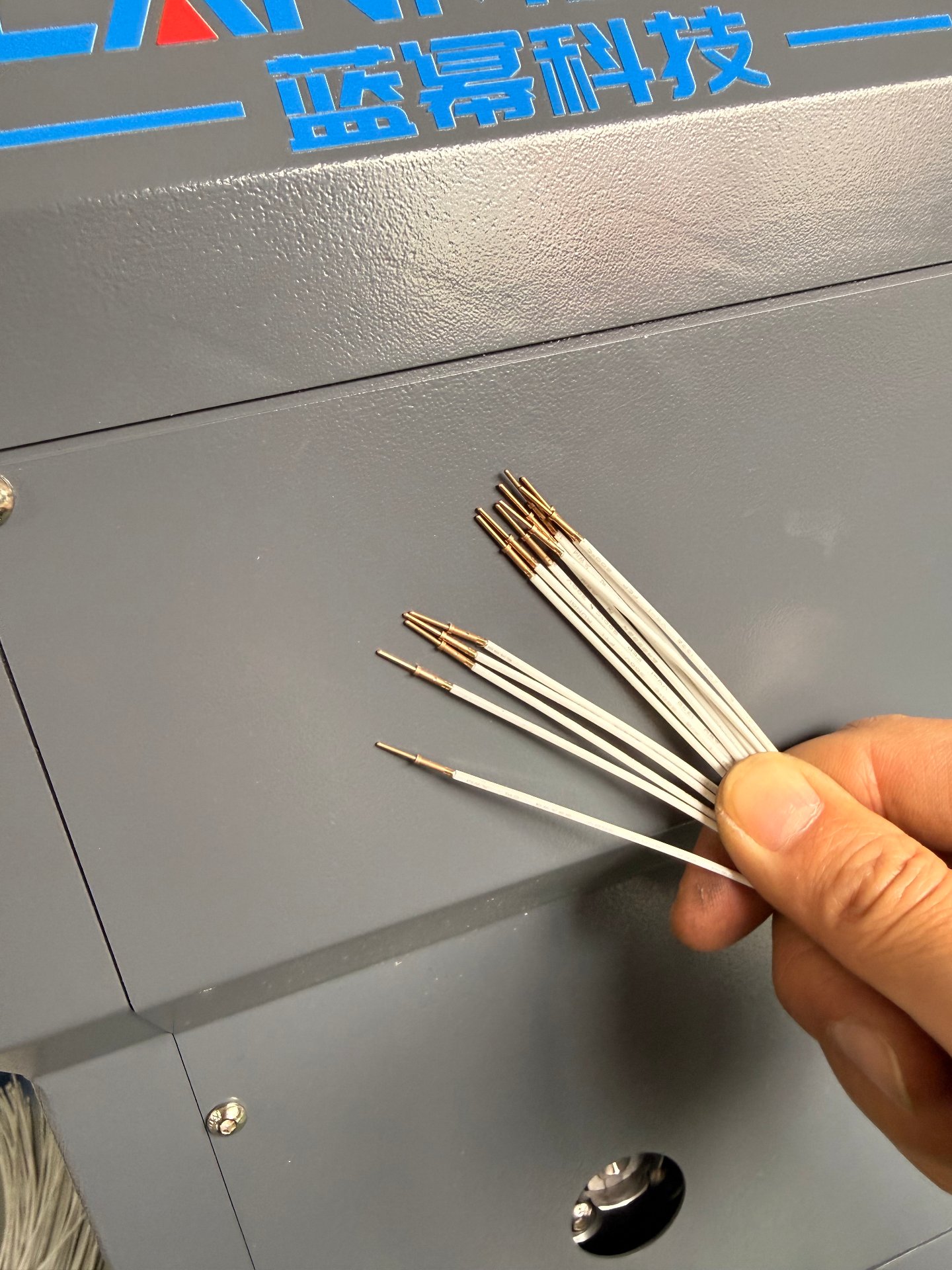
The Two Models, Side by Side
The table below contrasts a typical manual bench with an automated crimping/inspection cell built around Lanneas LP-MC2024 crimping plus J30J-WSM in-line inspection. Figures are illustrative ranges — your part complexity, pay rates and yield will shift them.
| Dimension | Manual bench | Automated cell |
|---|---|---|
| Operators per shift | 2–3 | 1 (supervises) |
| Typical defect rate | 2–5% | 0.3–0.8% |
| Throughput | limited by labor | up to 1200 pcs/h |
| Inspection | sample / visual | 100% in-line |
| Traceability | manual logs | per-cycle MES data |
| Upfront cost | low | higher |
An Illustrative ROI Calculation
Assume a line running 50,000 connectors/month. These are illustrative unit assumptions used only to show the math:
- Manual: 2 operators, labor ≈ $1,500/month each → $3,000/month.
- Manual defect/rework at 3% → 1,500 defective parts; at $1 rework each plus scrap ≈ $2,000/month.
- Automated: 1 operator ($1,500) + machine amortization ≈ $1,200/month → $2,700/month.
- Automated defect at 0.5% → 250 defective parts ≈ $350/month.
Manual monthly cost ≈ $5,000. Automated monthly cost ≈ $3,050. The illustrative saving is about $1,950/month — and that excludes the harder-to-quantify value of traceability and avoided field failures. Real numbers vary widely by part and region, so always model your own rates.
What Automation Actually Fixes
- Operator-dependent variation: servo + force-sensor control holds ±0.01 mm instead of drifting hand pressure.
- Escaped defects: 100% in-line pin-retention, wire-sequence and crimp-force checks catch issues manual QC misses.
- No audit trail: per-cycle data exports to MES, satisfying automotive (IATF 16949) and defense traceability needs.
When Manual Still Wins
Automation is not universal. Keep manual or semi-auto when:
- Volume is below a few hundred parts per month.
- The part changes constantly and tooling cost outweighs savings.
- Prototyping where flexibility beats repeatability.
The Bottom Line
Automation is rarely about replacing people — it is about removing variation, defects and blind spots at volume. Model your own labor and defect costs; for most production connectors above a few thousand parts a month, an automated cell pays for itself in reduced rework and labor well inside a year.
Manual vs Automatic Connector Assembly: Cost & Quality Comparison — FAQ
At what volume does automating connector assembly pay off?+
What defect rate improvement should I expect?+
How many operators does an automated cell need?+
Is the ROI calculation applicable to my line?+
What value does traceability add beyond cost saving?+
Related reading
How to Choose Wire Harness Crimping Equipment | Guide
Selecting wire harness crimping equipment comes down to matching the machine's capability to three variables: the termin
Precision Crimping and Auto Bundling
How automated crimping and bundling turn loose wires into tidy, reliable harnesses, and why shops are moving to it.
SMA Automatic Assembly Equipment Explained
A plain look at automatic SMA assembly equipment: how it runs, why shops use it, and the automotive, electronics, and co
Automatic Twist-Pin Crimping Machine
A high-precision automatic crimping machine built for micro-rectangular connectors. It solves the core production pain o