Published January 8, 2026 · Updated September 26, 2026
In short: The ANT-15 is a multi-station assembly cell for SMA, SMB and related coax connectors, built to hold dimensions every cycle rather than simply move fast. Published figures: 15 integrated stations, output 500 to 600 pieces per hour, one operator loading and supervising, typical yield above 98%, servo and force-sensor control with stored recipes, and per-cycle data export to MES. Its job is protecting concentricity, which is what protects RF performance.
粘贴进模板; 替换为 ANT-15 实拍/工作站特写 - 作者块替换为具名工程师 -->SMA Automatic Assembly Equipment Explained: The Lanneas ANT-15
This is a plain look at automatic SMA assembly through one concrete machine — the Lanneas ANT-15 SMA/SMB antenna automated assembly cell — how it runs, the specs that decide whether it beats manual assembly, and the RF work it is built for.
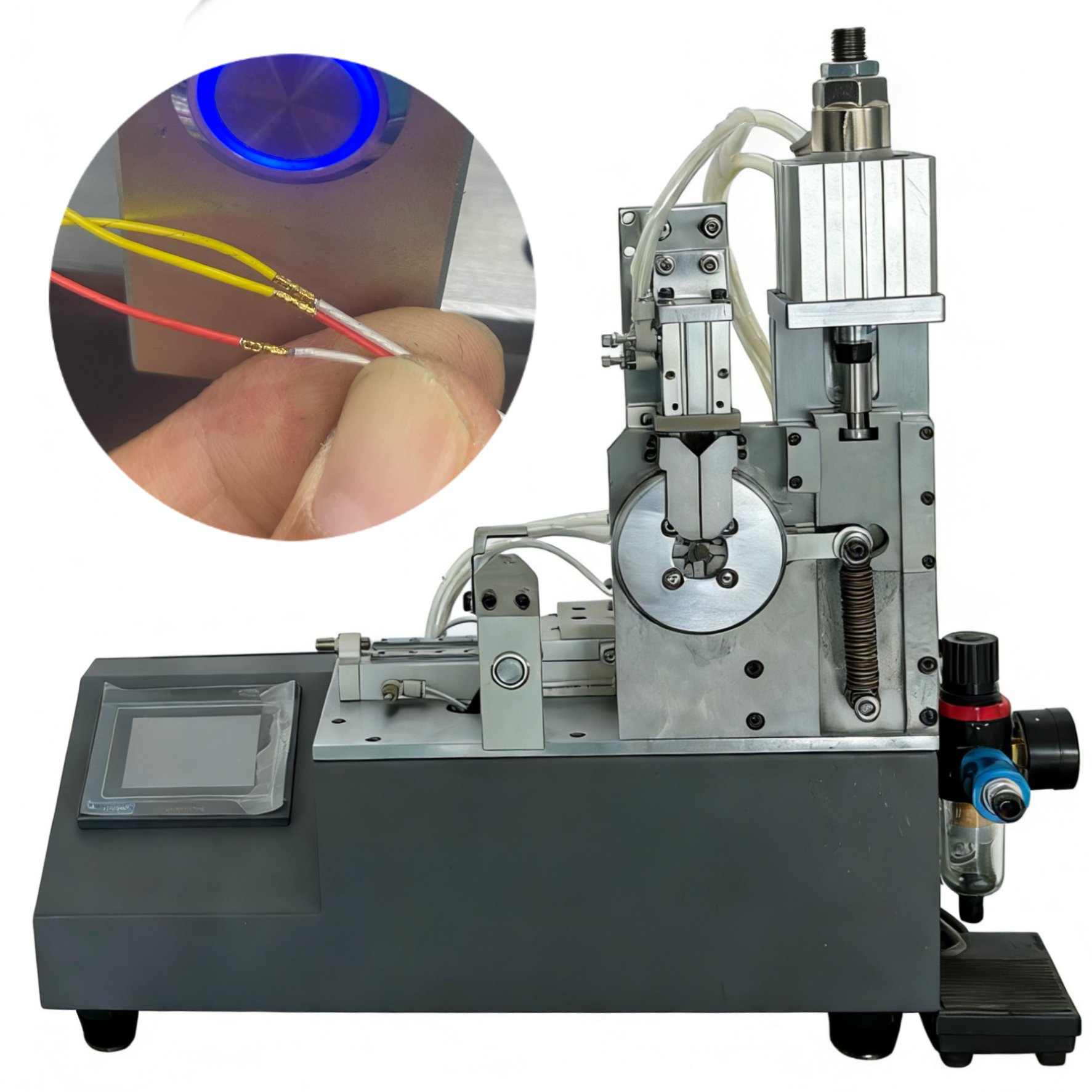
What the ANT-15 Is Built For
The ANT-15 handles repetitive joining and fitting of SMA/SMB and related coax connectors that would otherwise be done by hand. For RF antennas, a few microns of center-pin offset or crimp inconsistency translate directly into return loss and VSWR degradation — so the cell's job is to hold those dimensions every cycle, not just move fast.
- Stations: 15 integrated workstations
- Output: 500–600 pcs/h
- Typical yield: >98%
- Operators: 1 (loads/unloads and supervises)
- Process control: servo + force-sensor with stored, per-part recipes
- Traceability: per-cycle data export to MES
How It Works
A base carries load/unload zones and an assembly zone, plus first and second conveyors and a detection unit above the assembly area. The first conveyor brings a first part to the fixture; the second brings a second part, the two are joined through the fixture, and the detection unit reads their positions during assembly. If something is off, the machine corrects it before continuing. That closed-loop check is what keeps concentricity — and therefore RF performance — inside tolerance.
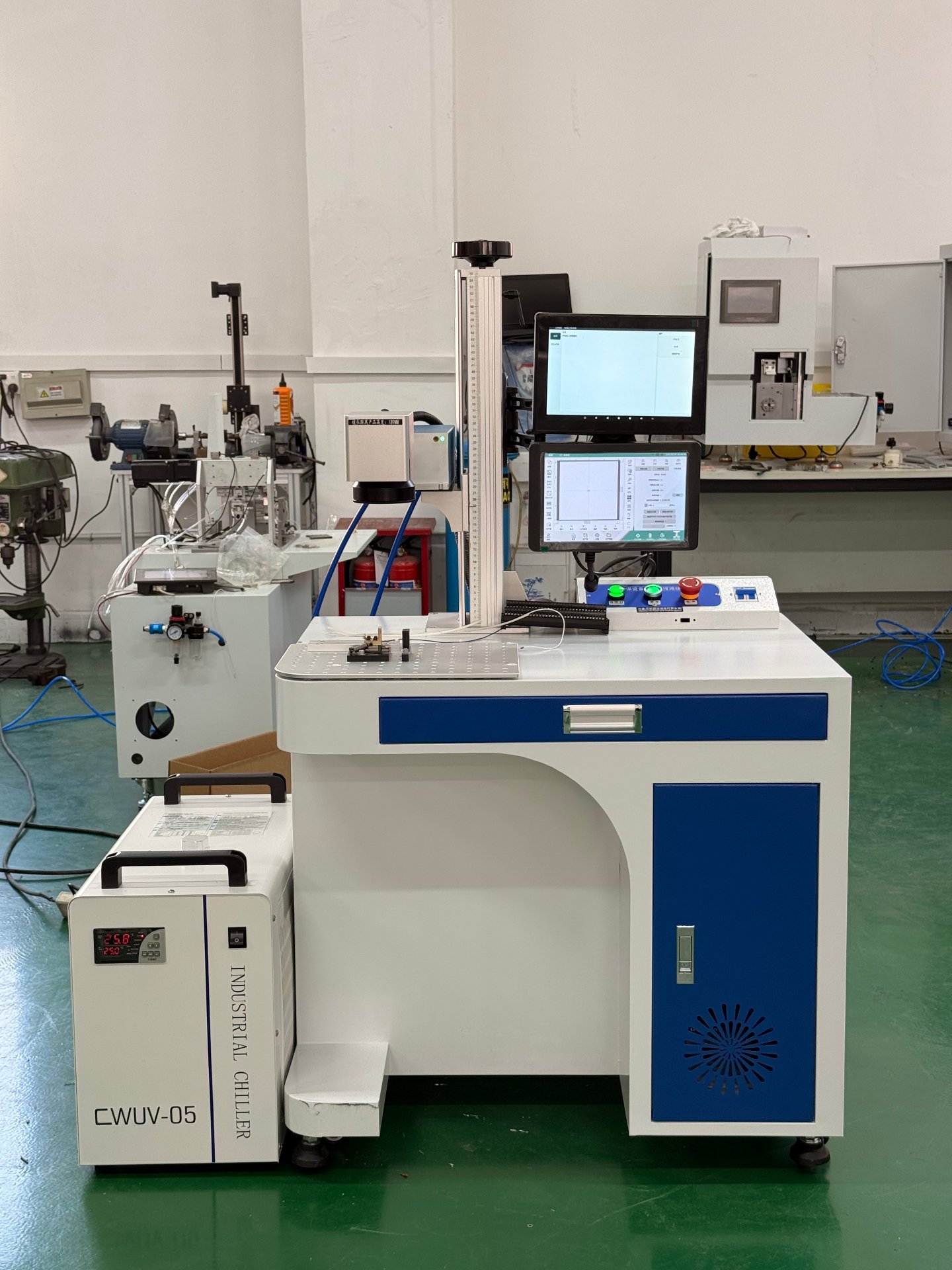
ANT-15 vs Manual Assembly
| Dimension | Manual bench | ANT-15 cell |
|---|---|---|
| Throughput | limited by labor | 500–600 pcs/h |
| Yield | operator-dependent | >98% typical |
| Center-pin concentricity | varies | held by closed-loop control |
| Operators | 2–3 | 1 |
| Traceability | manual logs | per-cycle MES data |
Where It's Used
- Telecom & 5G / RF: SMA/SMB antenna automated assembly for high-frequency, miniaturized parts.
- Automotive electronics: high-volume joining meeting IATF 16949 traceability workflows.
- Aerospace & defense: mission-critical RF interconnect assemblies where reliability is non-negotiable.
- Medical electronics: precision joining for miniature, cleanroom-compatible connectors.
When Manual Still Wins
The ANT-15 is not for everything. Keep manual or semi-auto when volume is below a few hundred parts a month, the part changes constantly and tooling cost outweighs savings, or during prototyping where flexibility beats repeatability.
The Bottom Line
Automatic SMA assembly pays off when throughput, yield and traceability start to dominate unit economics. The ANT-15's value is not just speed — it is removing the operator-to-operator variation that degrades RF performance at volume.
SMA Automatic Assembly Equipment Explained — FAQ
What are the key figures for the ANT-15?+
Which antenna types can the cell build?+
Why does the cell check position during assembly?+
How many operators are needed?+
When is manual assembly still the better choice?+
Related reading
RF Antenna Assembly Automation: From Coaxial Cable to SMA Connector Resources
How automated lines assemble SMA, SMB and GPS antennas from coaxial cable to finished product.
RF Connector Automation: How to Choose the Right Equipment (2026 Guide)
A practical, no-fluff guide to automating SMA/SMB, 174/RG58 and coaxial connector assembly — when it pays off, the specs
Manual vs Automatic Connector Assembly: Cost & Quality Comparison
Should you keep crimping by hand or move to automated cells? This side-by-side compares labor, defect rates and traceabi
SMA/SMB Antenna Automated Assembly Machine
An automated assembly machine for 174-line, SMA/SMB/GPS connector antennas, built for antenna manufacturers. It solves t