
Published August 10, 2026 · Updated September 23, 2026
In short: The new center-pin riveter targets small coax assemblies where the center conductor must be joined to a pin or contact without solder. Specification: force range 0.5 to 8 kN with 1% full-scale accuracy, stroke repeatability within plus or minus 0.01 mm, quick die changeover across 174, RG58 and RG174 variants, and MES-ready export. It serves RF test leads, antenna feeders, aerospace harnesses and communications backplanes running 174 or RG58 cable.
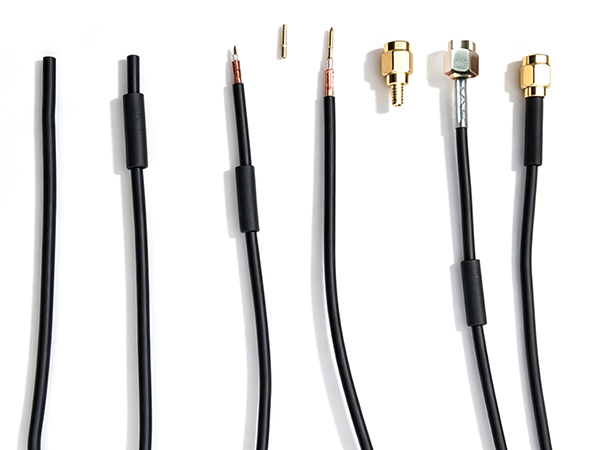
What the new machine covers
The 174/RG58 center-pin riveter is built for small coax assemblies where the center conductor must be joined to a pin or contact without solder. It uses a servo press and closed-loop force monitoring to keep each rivet within a stored window.
- Force range: 0.5–8 kN with 1% FS accuracy
- Stroke control: ±0.01 mm repeatability
- Quick die changeover for 174, RG58 and RG174 variants
- MES-ready data export for traceability
Where it fits
RF test leads, antenna feeders, aerospace harnesses and communications backplanes all use 174 or RG58 cable. The riveter replaces manual soldering or inconsistent hand tools with a repeatable, logged process.
Related Automation Equipment
Lanneas Adds 174/RG58 Center-Pin Riveter — FAQ
What does the 174/RG58 center-pin riveter do?+
What force range and accuracy does it offer?+
Which cable types can one machine handle?+
Where is this type of joint used?+
Can the machine support traceability requirements?+
Related reading
RF Connector Automation: How to Choose the Right Equipment (2026 Guide)
A practical, no-fluff guide to automating SMA/SMB, 174/RG58 and coaxial connector assembly — when it pays off, the specs
RF Antenna Assembly Automation: From Coaxial Cable to SMA Connector Resources
How automated lines assemble SMA, SMB and GPS antennas from coaxial cable to finished product.
Lanneas Expands Overseas Application Support
Remote commissioning, sample evaluation and on-site training are now available for overseas connector and harness manufa
Center-Pin Welder
An automatic soldering machine for RG58, SMA and 178 antenna makers. It solves the core problems of unstable solder volu