
Lanneas builds precision automation for high-frequency, miniaturized coax: SMA/SMB antenna assembly, 174/RG58 center-pin riveting and RF connector crimping. Hold ±0.01 mm repeatability at 500–800 pcs/h with full MES-ready traceability — protecting return loss, VSWR and yield on every part.
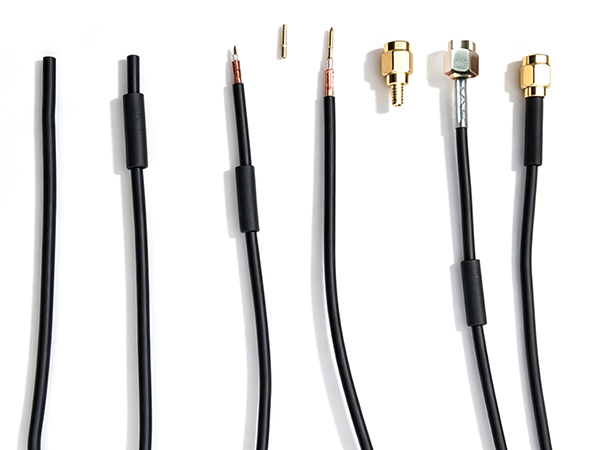
At GHz frequencies, a few microns of inconsistency shows up as signal loss. Manual processes struggle to keep up with miniaturized, high-mix coax production.
Variable force and concentricity degrade return loss and VSWR — failures only surface at final test or in the field.
Hand soldering 174/RG58 center pins is slow and uneven; rework eats margin on low-volume, high-mix runs.
Without per-cycle data, RF/defense and 5G supply chains cannot prove process control or recall root cause.
Each machine links to a dedicated product page with full specs. Combine them into a turnkey line.
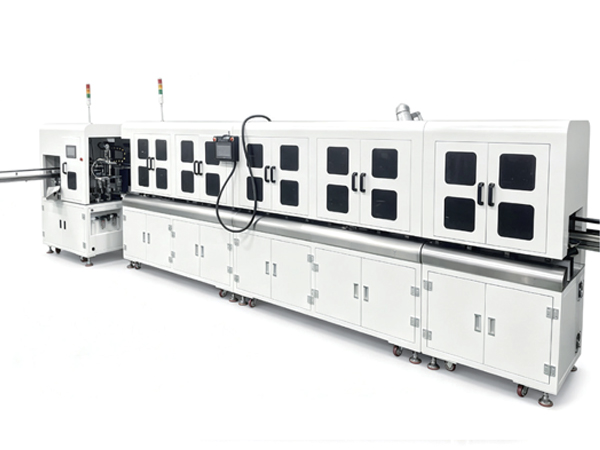
15 integrated stations, one operator, 500–600 pcs/h and >98% yield across 174/SMA/SMB/GPS antennas.
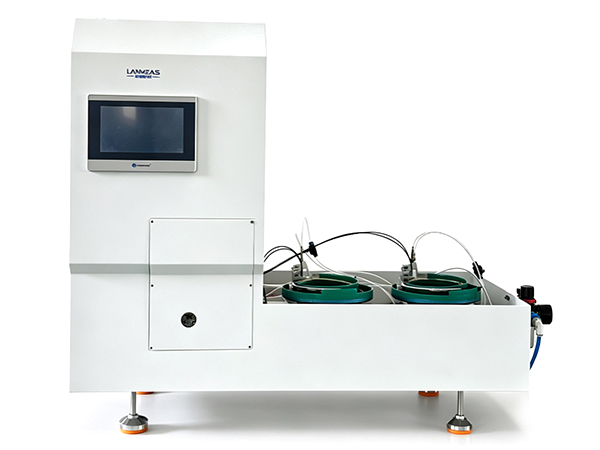
Closed-loop force riveting for 174-line and RG58 coaxial center pins, with digitized recipes and MES-ready data.
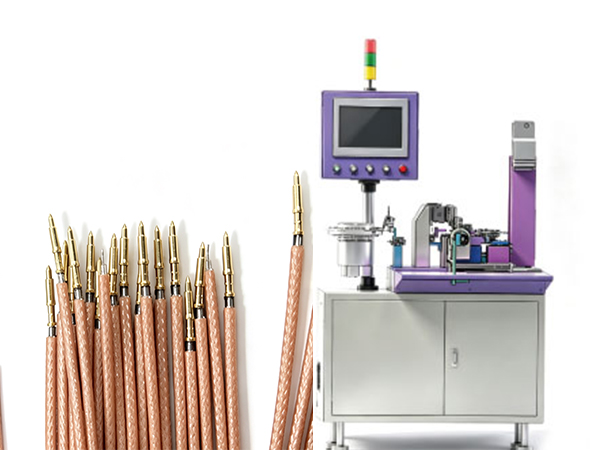
Precise solder control for SMA and 178 antenna center pins, reducing cold-joint and rework rates.
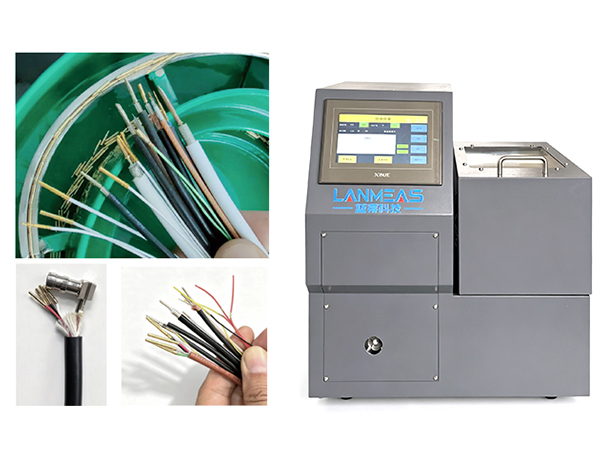
Servo + force-sensor crimping for RF wire harness with real-time monitoring and MES export.
RP-SMA (Reverse Polarity SMA) is one of the most frequently requested connector series in our RF automation projects. Commonly used in WiFi routers, IoT devices, LoRa modules, drone antennas and wireless communication equipment.
RP-SMA connectors have tight dimensional tolerances (center pin protrusion must be within ±0.05 mm) and require precise crimp force control. Manual assembly leads to:
A dedicated RP-SMA production cell that handles the complete assembly flow:
Result: >98% first-pass yield, 500–800 PPH capacity, full traceability per serial number.
Base-station and small-cell antenna assembly at volume with stable RF performance.
Reliable coax interconnects where signal integrity is non-negotiable.
Repeatable processes for mission-critical RF assemblies.
How to size RF connector automation for your throughput and spec.
Send us your connector type, target throughput and quality standard. Our engineers recommend the right machine or turnkey line within one business day.
Request a Quote →